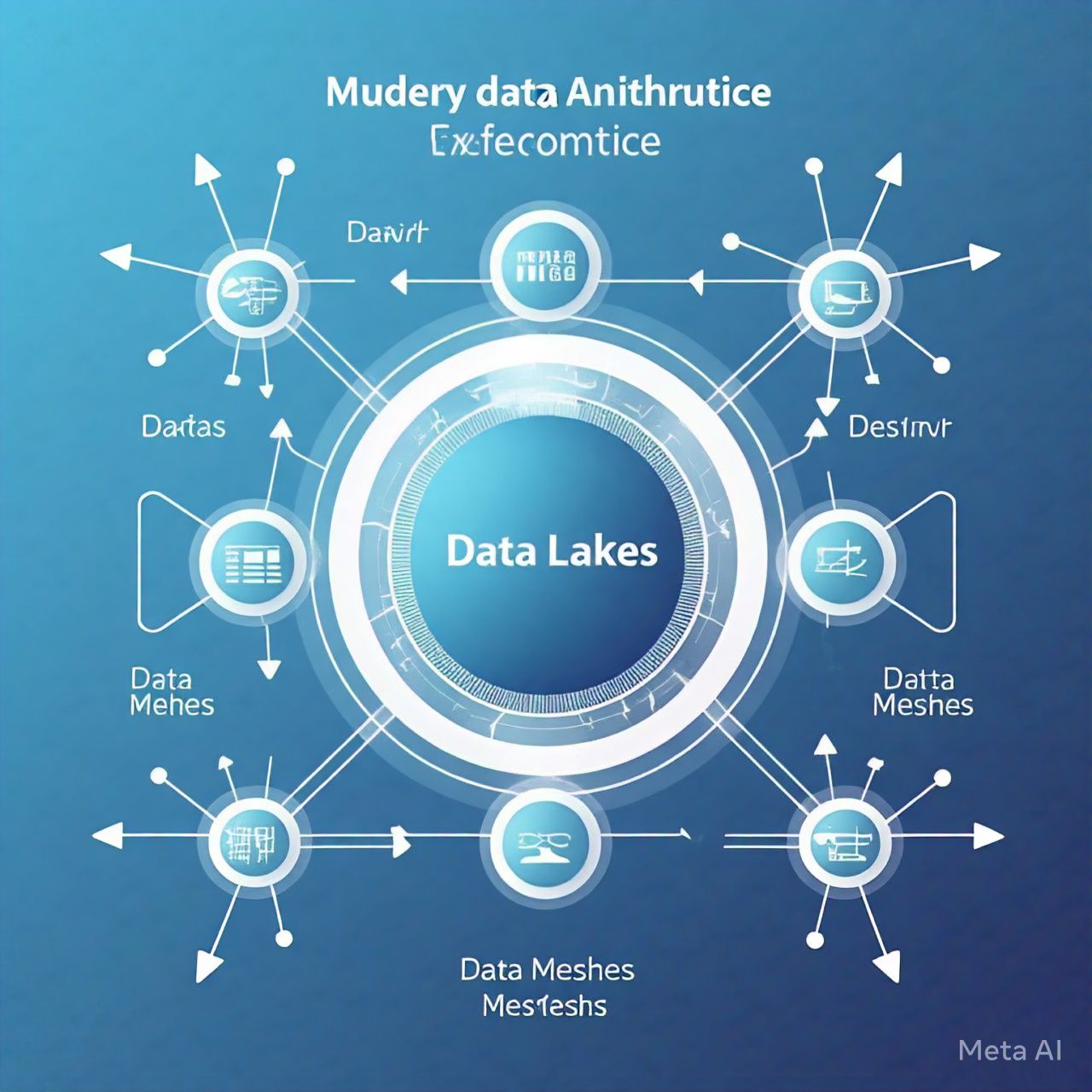
In today’s data-driven world, organizations are drowning in a sea of data. Managing this data effectively has become a critical challenge, and traditional approaches are struggling to keep up. Enter the data fabric – an emerging architecture poised to revolutionize data management and unlock the full potential of enterprise data. But what exactly is a data fabric, and why is it generating so much buzz?
Beyond Traditional Architectures
Traditional data management architectures, like data warehouses and data lakes, have served their purpose. However, they often fall short in today’s complex environment characterized by:
- Data Silos: Data residing in disparate systems, making integration and analysis a major hurdle.
- Hybrid and Multi-Cloud Environments: Organizations increasingly rely on a mix of on-premise and cloud-based systems, adding another layer of complexity.
- Real-Time Data Demands: The need for real-time insights requires faster data processing and integration capabilities.
- Increasing Data Volume and Variety: Handling the sheer volume and variety of structured, semi-structured, and unstructured data is a significant challenge.
- Data Security and Privacy Concerns: Protecting sensitive data and complying with regulations like GDPR is paramount.
These challenges necessitate a more agile, integrated, and intelligent approach to data management. This is where the data fabric comes in.
What is a Data Fabric?
A data fabric is an emerging data management architecture that provides a unified, consistent, and secure way to access, integrate, share, and manage data across a distributed landscape. Think of it as an intelligent layer that sits on top of your existing data infrastructure, connecting disparate data sources and providing a holistic view of your data assets.
Key Components of a Data Fabric
While the specific implementation can vary, a data fabric typically incorporates the following key components:
- Knowledge Graph: A knowledge graph serves as the semantic foundation of the data fabric, providing context and meaning to data by connecting data points and representing relationships between them.
- Data Integration and Orchestration: The fabric seamlessly integrates data from various sources, both internal and external, using a variety of techniques like API integration, data virtualization, and ETL processes.
- Active Metadata Management: Instead of passively storing metadata, a data fabric actively manages it, enriching data with context and making it more discoverable and understandable.
- Data Governance and Security: Built-in data governance and security capabilities ensure data quality, compliance, and access control across the entire fabric.
- AI/ML Capabilities: Many data fabric solutions leverage AI and machine learning to automate tasks like data discovery, classification, and integration, as well as to provide intelligent insights.
Benefits of Implementing a Data Fabric
Adopting a data fabric architecture can deliver significant benefits, including:
- Faster Time to Insights: By providing a unified view of data and automating integration, a data fabric accelerates data analysis and enables faster, more informed decision-making.
- Improved Data Access and Discoverability: The knowledge graph and active metadata management make it easier for users to find and understand the data they need.
- Enhanced Data Quality and Trust: Data governance and quality controls built into the fabric ensure that data is accurate, consistent, and reliable.
- Increased Agility and Scalability: The flexible and distributed nature of the data fabric allows organizations to adapt to changing business needs and scale their data infrastructure more easily.
- Stronger Data Security and Compliance: Centralized security and access controls help organizations protect sensitive data and comply with regulations.
- Self-Service Capabilities: The data fabric enables self-service capabilities for users through the use of the data catalog.
Data Fabric vs. Data Mesh
While both data fabric and data mesh are modern data architectures, they have distinct differences. Data mesh is a decentralized, domain-driven approach where data is treated as a product and managed by individual domain teams. Data fabric, on the other hand, is a technology architecture that can be used to implement a data mesh, but it can also support other data management approaches. In essence, data mesh is a specific organizational and architectural pattern that can be enabled by a data fabric.
The Future of Data Management
The data fabric is not just a buzzword; it represents a fundamental shift in how organizations manage and leverage their data. By providing a unified, intelligent, and secure layer over existing data infrastructure, the data fabric empowers businesses to break down data silos, accelerate innovation, and become truly data-driven. As the volume and complexity of data continue to grow, the data fabric is poised to become the cornerstone of modern data management strategies, enabling organizations to unlock the full potential of their data assets and thrive in the digital age.